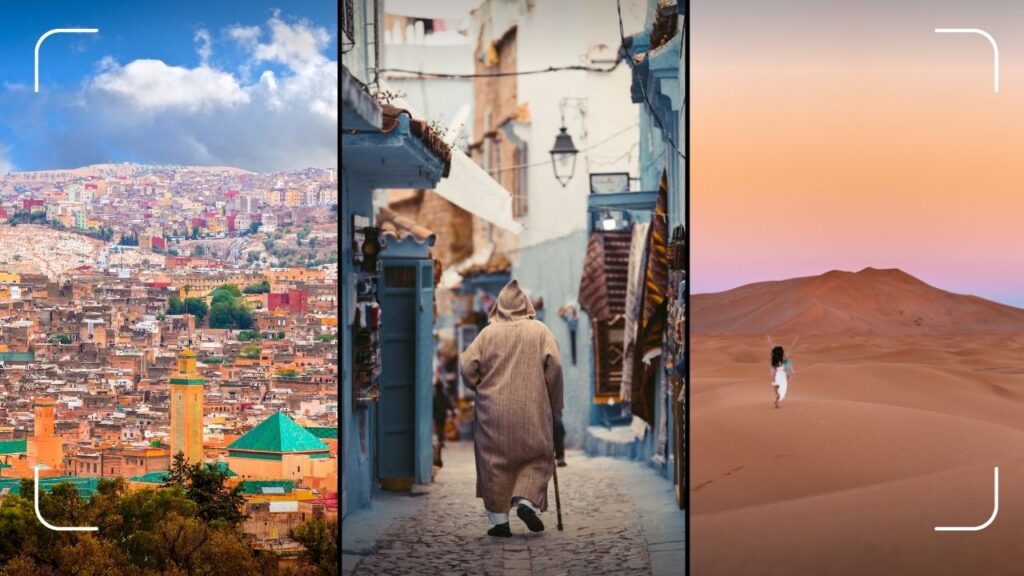
Morocco is a beautiful country known for its rich culture, old history, and amazing hospitality. However, it is also a traditional and conservative country. Understanding Moroccan etiquette is very important for travelers. When you respect local traditions, people will welcome you warmly. Religion and family play a big role in daily life here. While Moroccans are very friendly to tourists, they expect visitors to follow basic cultural rules.
To have the best experience, remember these top rules:
- Always dress modestly, especially outside tourist areas.
- Ask before you take photos of local people.
- Respect Islamic traditions and religious places.
- Avoid showing affection in public spaces.
Morocco values modest dress, respectful greetings, and cultural awareness. By following these basic rules, you ensure a respectful, safe, and enjoyable trip for everyone.
Quick Summary: Top Do’s and Don’ts in Morocco
Morocco has strong cultural rules about clothing, greetings, and hospitality. Here is a quick list of rules:
Do:
- Dress modestly: Cover your shoulders and knees.
- Greet locals politely: Say “Salam Alaikum.”
- Ask before taking photos: Always get permission.
- Tip service workers: Leave a small tip.
- Accept hospitality: Drink the mint tea offered to you.
Don’t:
- Show public affection: Do not kiss in public.
- Disrespect religion: Be quiet near mosques.
- Photograph without permission: Respect privacy.
- Use your left hand: Use your right hand for giving.
- Drink alcohol in public: Only drink in licensed bars.
Public affection, disrespecting religion, and taking photos without permission are considered inappropriate behaviors.
Cultural Do’s in Morocco
Do Dress Modestly and Respect Local Culture
When traveling in Morocco, how you dress is very important. Modest dress is recommended, especially outside tourist areas. Both men and women should cover their shoulders and knees in public spaces. It is best to wear loose, comfortable clothing. This keeps you cool in the heat and shows respect for the local culture. In big tourist cities like Marrakech, people are more relaxed. However, in rural areas, traditional villages, and near religious sites, you must dress conservatively. Wearing tight clothes, short skirts, or sleeveless shirts can bring unwanted attention. Covering your shoulders and knees helps show respect and helps you blend in better with the locals.
Do Greet People Politely
Greeting locals politely strengthens social interactions and shows respect for Moroccan culture. Before you ask a question or buy something, you should always say hello. The most common and respectful greeting is “Salam Alaikum” (Peace be upon you). You can also use the French word “Bonjour.” Greetings are very important in shops, hotels, and casual social interactions. Taking a moment to say hello and ask how someone is doing shows that you are polite. It will make your experience much better, and locals will be much more helpful and friendly to you.
Do Accept Hospitality and Mint Tea
Moroccan mint tea is a famous cultural symbol of friendship and welcoming. When you visit a home, a shop, or a hotel, someone will often offer you a glass of sweet mint tea. You should always accept it. Refusing hospitality like tea may seem impolite because hospitality is central to Moroccan culture. Even if you do not want to drink the whole glass, just take a small sip to show your appreciation. Sitting and drinking tea is a great way to connect with locals, learn about their lives, and build good relationships.
Do Ask Permission Before Taking Photos
Morocco is a very beautiful and colorful country, perfect for photography. However, taking photos without permission can offend locals and should be avoided. You must always ask before photographing local people, shop owners, or street performers. This is especially important for women and older people, who value their privacy highly. Some people might say no, and you must respect their decision. Others might ask for a small tip in exchange for the photo. Always be polite, smile, and ask for permission before you point your camera at anyone.
Do Tip for Services
Tipping is customary and appreciated across Morocco’s service sector. While it is not strictly required, service workers depend on tips to support their families. In restaurants and cafes, it is polite to leave a 5% to 10% tip if the service was good. When taking a local taxi, you should round up the fare to the nearest Dirham. Tour guides, hotel staff, and luggage carriers also expect small tips for their help. Keeping a few small coins in your pocket is a very good idea so you can tip easily during your daily activities.
Cultural Don’ts in Morocco
Don’t Show Public Displays of Affection
Public affection is frowned upon due to conservative cultural norms. Morocco is a traditional Islamic country, so modesty in behavior is just as important as modesty in clothing. You should avoid kissing or hugging your partner in public places. These actions can make local people feel very uncomfortable. Holding hands is acceptable in some areas, especially in modern cities or tourist resorts. However, it is best to keep your romantic affection private. By avoiding public displays of affection, you show that you understand and respect the local values and traditional way of life.
Don’t Disrespect Religion or Mosques
Religion plays a central role in daily life and should always be respected in Morocco. The country is mostly Muslim, and Islam guides the daily routine. Non-Muslim tourists are not allowed to enter most mosques in Morocco, except for the famous Hassan II Mosque in Casablanca. You should not try to go inside closed religious sites. You must also respect prayer times. When you hear the call to prayer, be polite and avoid loud behavior or playing loud music near mosques. Always act calmly and respectfully near any religious building or during religious holidays.
Don’t Use Your Left Hand for Eating or Giving
Using the right hand is an important cultural norm in Morocco. In Islamic and Moroccan culture, the left hand is considered unclean. Traditionally, it is used for bathroom hygiene. Therefore, you must never use your left hand for important actions. You should always use your right hand for greetings, shaking hands, eating food, and giving or taking items like money. Even if you are left-handed, try your best to use your right hand when interacting with locals or eating from a shared plate. This simple action shows great respect for local customs.
Don’t Photograph People Without Permission
Photography etiquette is essential to respect privacy and culture. As mentioned before, you should never take photos of people without asking first. Do not treat locals like tourist attractions. Furthermore, you must never take pictures of police officers, soldiers, military buildings, or government facilities. This is strictly forbidden and can cause serious trouble with the authorities. Also, be very careful when taking photos near religious sites or people praying. Always look around and make sure you are not capturing anyone who does not want to be in your picture.
Don’t Drink Alcohol in Public Areas
Public alcohol consumption is socially inappropriate and sometimes illegal in Morocco. Because it is a Muslim country, most locals do not drink alcohol. You will not find alcohol in regular cafes or supermarkets. Alcohol is only allowed in specially licensed places, like certain hotels, tourist bars, and high-end restaurants. You must never drink alcohol on the street, in parks, or on public beaches. Being drunk and loud in public is very disrespectful and will upset the local people. If you want to drink, do it quietly and responsibly inside licensed areas.
Do’s and Don’ts in Moroccan Markets (Souks)
Shopping in the local markets, known as souks, is a wonderful experience. However, negotiation is expected but should remain respectful and friendly. Bargaining is completely normal here, and shop owners expect you to do it. When you see something you like, ask for the price, but be polite. A good rule is to start your negotiation lower, at about half the original price. Then, slowly agree on a middle price.
Do smile and treat the negotiation like a fun game. Don’t haggle aggressively or get angry. If the price is too high, simply say thank you and walk away. Staying polite ensures a good experience for both you and the seller.
Do’s and Don’ts During Ramadan in Morocco
Ramadan is a holy month of fasting for Muslims. If you travel during this time, visitors should respect Ramadan traditions and avoid public eating during fasting hours. From sunrise to sunset, locals do not eat, drink, or smoke.
Do respect the fasting culture. As a tourist, you can eat, but don’t eat, drink water, or chew gum publicly in the streets. Do it privately in your hotel or in open tourist restaurants.
Also, expect business hour changes. Many shops and museums will open later and close earlier. Be patient, as people may be tired. Enjoy the festive atmosphere in the evenings when everyone breaks their fast together.
Important Travel Etiquette Tips Most Tourists Don’t Know
Beyond the basic rules, respectful behavior improves interactions and experiences. Here are a few extra tips many tourists miss. First, always remove your shoes when entering a Moroccan home. The host will usually provide sandals for you. Second, deeply respect elders. In Moroccan society, older people are highly valued. Always give up your seat for them and speak to them politely.
Third, be patient with the local pace of life. Things move slower in Morocco, so do not rush or get stressed if service is slow. Finally, learn a few basic Arabic phrases like “Shukran” (Thank you). Locals will love your effort and treat you like a welcome friend.
FAQs Section
Is Morocco strict for tourists?
Morocco is not overly strict, but it is culturally conservative. The country is very welcoming to tourists and understands Western habits. However, visitors are expected to respect local Islamic traditions. This means dressing modestly, avoiding public drunkenness, and not showing romantic affection in public. As long as you are polite and respect the basic cultural rules, you will find Morocco to be a very relaxed and friendly destination.
What should tourists avoid in Morocco?
Tourists should avoid wearing revealing clothing, such as short shorts or sleeveless tops, especially outside main tourist zones. You must avoid walking into mosques if you are not Muslim. Never take photos of military buildings or police officers. Also, avoid drinking alcohol in public places and never use your left hand to eat or hand over money, as it is considered unclean.
Is it rude to refuse tea in Morocco?
Yes, refusing tea can be seen as rude. Mint tea is a strong symbol of Moroccan hospitality and friendship. When a local person offers you tea, they are welcoming you. Even if you are not thirsty or do not like sweet drinks, you should accept the glass. Taking just a small sip and saying thank you shows that you respect their culture and appreciate their kind gesture.
Can tourists wear shorts in Morocco?
Tourists can wear shorts in Morocco, but it depends on the length and location. Long shorts that cover the knees are usually fine for men. For women, it is best to avoid short shorts completely. In beach resorts or private hotels, shorts are normal. However, in rural villages, local markets, or near religious sites, both men and women should choose long trousers or skirts to show respect.
FAQs Section
Is Morocco strict for tourists?
Morocco is not overly strict, but it is culturally conservative. The country is very welcoming to tourists and understands Western habits. However, visitors are expected to respect local Islamic traditions. This means dressing modestly, avoiding public drunkenness, and not showing romantic affection in public. As long as you are polite and respect the basic cultural rules, you will find Morocco to be a very relaxed and friendly destination.
What should tourists avoid in Morocco?
Tourists should avoid wearing revealing clothing, such as short shorts or sleeveless tops, especially outside main tourist zones. You must avoid walking into mosques if you are not Muslim. Never take photos of military buildings or police officers. Also, avoid drinking alcohol in public places and never use your left hand to eat or hand over money, as it is considered unclean.
Is it rude to refuse tea in Morocco?
Yes, refusing tea can be seen as rude. Mint tea is a strong symbol of Moroccan hospitality and friendship. When a local person offers you tea, they are welcoming you. Even if you are not thirsty or do not like sweet drinks, you should accept the glass. Taking just a small sip and saying thank you shows that you respect their culture and appreciate their kind gesture.
Can tourists wear shorts in Morocco?
Tourists can wear shorts in Morocco, but it depends on the length and location. Long shorts that cover the knees are usually fine for men. For women, it is best to avoid short shorts completely. In beach resorts or private hotels, shorts are normal. However, in rural villages, local markets, or near religious sites, both men and women should choose long trousers or skirts to show respect.
Final Tips for Respectful Travel in Morocco
To have a wonderful trip, always keep these key etiquette rules in mind. Dress modestly, ask before taking photos, and always use your right hand. Remember that respect and cultural awareness are your best tools as a traveler. Moroccans are incredibly kind and generous people who love sharing their country with visitors.
Do not let the fear of making a mistake stop you from enjoying your trip. Just be polite, smile, and apologize if you do something wrong. Encourage yourself to embrace Moroccan culture, try the tea, and learn a few Arabic words. Your respect will open doors to amazing local experiences.